


Deutsche Bank leads the 2026 TABInsights CIW ranking among Europe-based corporate, investment and wholesale banks, as digital capability, operational efficiency and franchise strength increasingly differentiate the region’s top institutions.
New B2B cross-border payment rails are outpacing traditional correspondent banking on speed, predictability, and transparency. Corporate treasuries increasingly prefer these new rails, while banks anchored in legacy infrastructure face structural revenue pressures, with even modest margin shifts threatening billions in annual income.

Leading global banks are deploying AI to enhance cash visibility and liquidity forecasting. However, adoption remains uneven, with predictive capabilities such as cash forecasting advancing rapidly, while execution-layer functions including funding optimisation and liquidity orchestration remain fragmented and less mature.
Aggregate losses across Hong Kong's digital banks narrowed sharply, while two leading players, ZA Bank and livi Bank, moved into profitability, supported by an improving revenue mix and tighter cost control, signalling growing progress towards break-even across the sector after more than six years in the market.
Across 10 banks tracked from 2021 to 2025, Industrial and Commercial Bank of China Asia and Bank of China (Hong Kong) led retail loan expansion with four-year compound annual growth rates of 9% and 5%, respectively, while Nanyang Commercial Bank and China Construction Bank Asia recorded sustained contraction at -7% and -4%.
Vietnam's banking sector performance strengthened sharply in the first quarter of 2026, but funding pressures and higher provisions weighed on profit growth. Vietcombank led in absolute profit, while VietinBank and VPBank recorded strong year-on-year gains.
Japan’s MUFG claims first place among Asia Pacific's corporate, investment and wholesale banks as Indonesia’s Bank Mandiri records the region's strongest rank improvement on the back of simultaneous revenue growth, profitability and asset quality improvement.
Mapping deposit growth against loan growth across the world's 1,000 largest banks reveals that 54% expanded lending faster than deposits between 2022 and 2024. When funding structures and liquidity buffers are also considered, Vietnam and Saudi Arabia emerge as the markets with the most vulnerable banking sectors. This underscores the structural challenge of building strong customer deposit franchises in high-growth emerging markets.
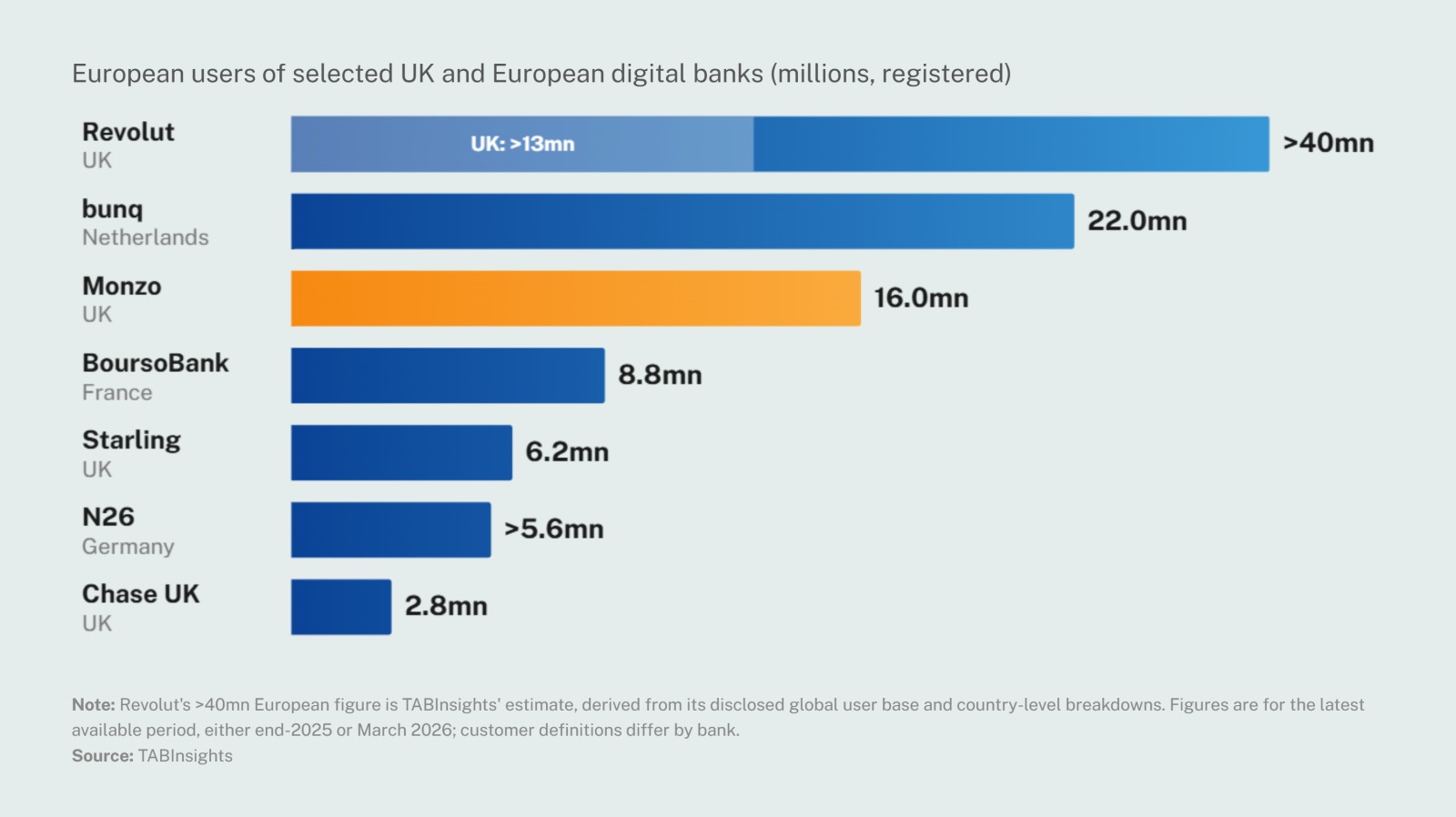
Digital banks with loan balances above $250 million are significantly more likely to be profitable, as scale and product diversification strengthen revenue. Most reach breakeven within three to six years. For those still unprofitable past the seven-year mark, N26 in Germany, Varo Bank in the US, Lunar Bank in Denmark and CIMB Bank Philippines among them, face an increasingly difficult case for continued investment.
European banks across 34 markets saw net profit grow by a factor of 4.4 between FY2020 and FY2025, driven by post-pandemic recovery and the European Central Bank’s (ECB’s) most aggressive rate-hike cycle in a generation between 2022 and 2023. As these growth tailwinds ease and the International Monetary Fund (IMF) and ECB revise Euro area real GDP growth to between 0.9 and 1.1% in 2026, banks that built structural capacity during the windfall years now demonstrate more stable earnings, with banks in Belgium, Eastern Europe and the Nordics emerging as structural leaders.
Global CIW banking has entered an execution phase, where rank movement is driven by improvement across multiple dimensions, while the efficiency gap between Middle Eastern and Western institutions widens
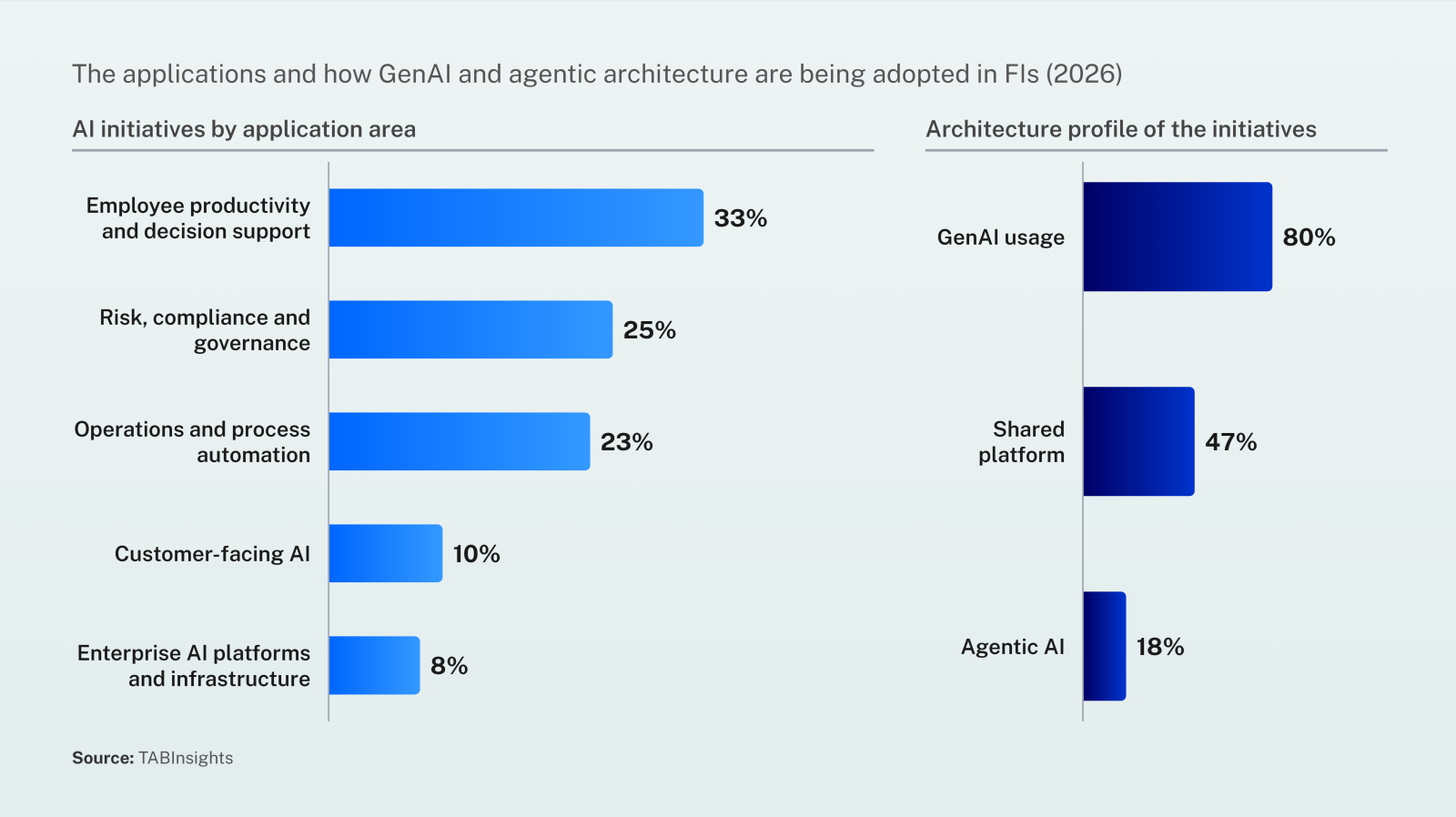
An analysis of AI initiatives across 29 Global Systemically Important Banks (G-SIBs) from 2023 to 2025 reveals a sector in structural transition: from experimentation to scaled enterprise execution, from point solutions to platform architectures, and from model access to data control and insights as the primary source of competitive strength. JPMorgan Chase’s decade-long institutional AI build illustrates what that transition looks like at the world's largest, most interconnected and systemically important banks.