


Banner.png)

The licence becomes the moat
- A crypto-native bank and Revolut won the same charter incumbents hold
- Twenty-one banks, an Indian lender and a Brazilian fintech chased one credential
- Regulators, not engineers, are now deciding who builds the next system
Top stories
A crypto-native start-up wins the bank charter incumbents hold
North America | 3 September 2026
From trust charter to full charter
The Office of the Comptroller of the Currency, the US federal bank regulator, granted preliminary conditional approval on 3 September for OpenReserve Bank, a blockchain-native venture backed by Andreessen Horowitz, to charter as a full national bank. The regulator granted a similar charter to Revolut the same week.
Why full beats trust
Earlier crypto charters from the regulator went to trust companies, which cannot take deposits or reach Federal Reserve payment systems. A full charter gives OpenReserve a path to deposit insurance and Federal Reserve access once it raises the required 210 million dollars in capital and clears final approval.
The queue just changed
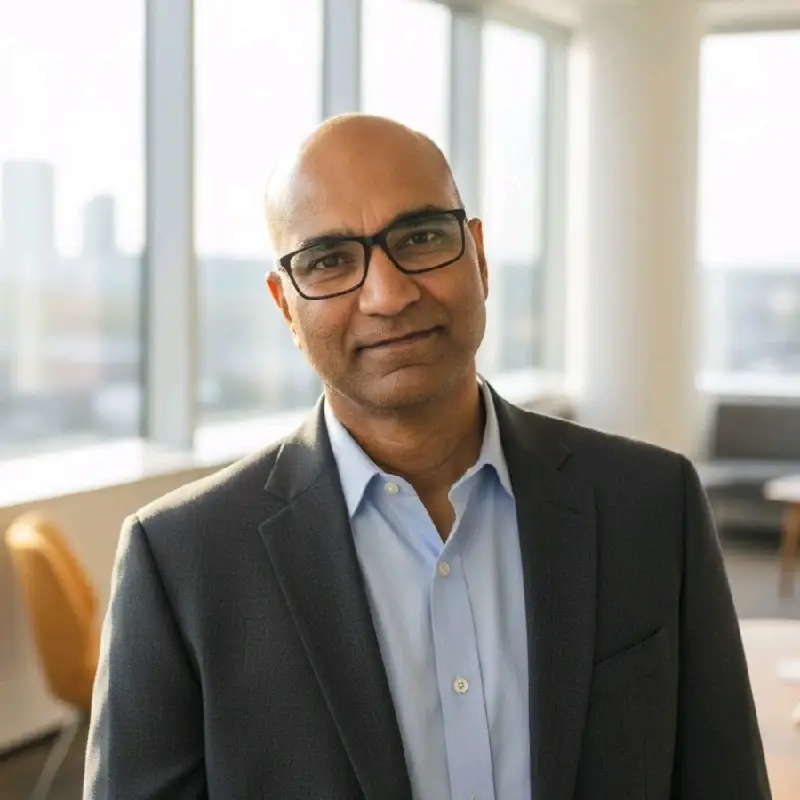
Co-founder and chief executive officer Dee Choubey said: "We chose the national bank path deliberately." Banks that assumed crypto-native entrants would stay confined to custody now face a rival built with the same charter, the same deposit insurance eligibility and continuous settlement designed into its ledger from day one.
Where this leads
Within three to five years, several of today's trust-chartered crypto banks are likely to reapply for full charters once OpenReserve and Revolut prove the path works, narrowing the gap that has kept crypto-native firms out of core deposit-taking.
Twenty-one banks commit to a stablecoin with no name and no executive attached
North America and Europe | 1 September 2026
A joint statement, not a launch
Twenty-one financial institutions, including Bank of America, Citi, Goldman Sachs, Deutsche Bank and UBS, said on 1 September that they will incorporate a company in the second half of 2026 to issue a dollar-denominated stablecoin, targeting a market launch in the first half of 2027.
Bigger, but less specific
The group has grown from nine banks studying the idea in October 2025 to twenty-one today, spanning North America, Europe, East Asia, the Middle East and Africa. The announcement named no chief executive, no company, no blockchain and no custodian.
A hedge, not yet a product
A consortium this size moves at the pace of its most cautious member. Banks joining are buying insurance against being left out of dollar stablecoin issuance, not committing capital to a working product, which leaves single-institution efforts freer to set the terms other banks eventually have to match.
Where this leads
Expect at least one participating bank to break away and launch its own stablecoin before the joint venture reaches market, the same pattern that split earlier bank consortiums once individual members judged the shared timeline too slow.
A central banker tells finance ministers that AI is now a financial stability problem
Europe and Global | 1 September 2026
The warning
Andrew Bailey, governor of the Bank of England and chair of the Financial Stability Board, wrote to G20 finance ministers and central bank governors that frontier artificial intelligence models are showing more autonomous, capable behaviour with direct implications for markets. He said: "This is particularly important from a financial stability perspective."
Debt, concentration and cyberattacks
Bailey pointed to stretched valuations in AI-linked equities, debt-funded investment between AI developers and hyperscale computing providers, and the risk that AI-driven cyberattacks could hit several interconnected financial institutions using shared technology providers at once.
The gap the letter admits
No regulator has built supervisory tools that treat AI as a cross-border, cross-institution risk rather than a firm-level one. Banks and technology providers concentrated around the same few AI systems are exposed to a single point of failure that no current stress test is designed to catch.
Where this leads
Expect the Financial Stability Board to propose the first cross-border AI incident reporting standard for banks within the next 12 to 18 months, once national regulators finish arguing over whose supervisory perimeter the risk falls inside.
India settles a corporate bond in central bank digital money for the first time
South Asia | 7 September 2026
Three issuers, one ledger
The Securities and Exchange Board of India and the Reserve Bank of India launched Demat 2.0, a pilot linking tokenised corporate bonds to India's wholesale central bank digital currency. REC, a state-owned power lender, issued the first bond on 7 September, raising 5 billion rupees (52.3 million dollars) at a coupon of 7.30%, oversubscribed by roughly eight times. Larsen & Toubro and IIFL followed within two days.
Same-day money against same-day securities
The system links bond ownership records on a shared ledger to the digital rupee through India's Unified Market Interface, so the bond and the payment settle together instead of the usual two to three day gap. REC's director of finance, Rajesh Kumar, credited the regulator's "visionary leadership in strengthening India's capital markets."
A sandbox, not yet a market
No secondary trading exists for these bonds yet. The pilot proves settlement works; it does not yet prove investors will hold or trade tokenised debt once the lock-in period ends.
Where this leads
Whether more private issuers follow Larsen & Toubro past this quarter will show whether tokenised settlement stays a small circle of central bank digital currency-ready institutions or scales into the wider Indian bond market.
Latin America's biggest fintechs stop asking for permission and start asking for a bank licence
Latin America | 10 September 2026
From access to ownership
Nubank's Mexican unit began operating as a bank last month, the first Mexican popular financial society authorised to convert, while its parent agreed in July to acquire a Brazilian bank to secure a domestic licence. Mercado Pago has an application reportedly first in line at Mexico's banking regulator, and Argentina's Ualá already holds full banking licences in two countries.
Why the old licence stopped working
Nubank's lighter Mexican charter capped deposit insurance at a fraction of what a full bank licence allows; converting raises that ceiling sixteenfold and opens access to payroll accounts. Álvaro Machado Dias, associate director of research group Instituto Locomotiva, said fintechs have moved into "the central piece of the Brazilian banking economy."
Incumbents lose their last structural advantage
A banking licence was the one asset traditional lenders held that fintechs could not simply out-build with better software. That advantage is now expiring market by market across the region.
Where this leads
Within three years, expect Brazilian and Mexican incumbents to compete for deposits against fintech rivals holding identical charters, forcing a pricing war on the one product, savings accounts, that legacy banks have historically not had to defend.
A global bank opens institutional Bitcoin trading in a market that still has no digital pound equivalent
Middle East | 3 September 2026
First mover among global systemically important banks
Standard Chartered said on 3 September that its Dubai International Financial Centre entity, regulated by the Dubai Financial Services Authority, now offers institutional clients deliverable spot Bitcoin and Ether trading, built on the electronic trading channels the bank already uses for foreign exchange. The bank said this makes it the first global systemically important bank to offer the service in the United Arab Emirates.
Custody was the easy part
Standard Chartered has held digital asset custody licences in the UAE since 2024. Trading execution is the harder step, because it exposes the bank's own balance sheet and compliance systems to live crypto market risk rather than simply safekeeping client assets.
A gap rivals cannot close quickly
Senior executive officer Christopher Parsons said the launch shows the strength of combining "global markets expertise" with a regulated regional base. Competing global banks without an equivalent DIFC licence now face a multi-year regulatory process to match the offering, not a product decision.
Where this leads
Expect at least one other global systemically important bank to file for a comparable DIFC licence within 18 months, once client demand makes the absence of institutional crypto trading a competitive liability rather than a caution.
Coinbase gives community banks a stablecoin rail they did not have to build themselves
North America | 10 September 2026
The partnership
Coinbase and payments platform Moov announced on 10 September that more than 1,000 community banks and credit unions already served by Moov can now offer stablecoin payment services embedded inside their existing systems. Coinbase vice chair Ryan VanGrack said the deal gives smaller institutions "the regulated infrastructure they need to offer these services directly."
Solving a problem smaller banks could not solve alone
Moov chief executive officer Wade Arnold said business customers were already going outside their primary bank to access stablecoins. Community banks lack the balance sheet and compliance staff to build custody and settlement infrastructure themselves, which had been pushing commercial deposits toward crypto-native platforms instead.
Who keeps the customer relationship
The local bank stays the customer's front door while Coinbase supplies custody and transaction infrastructure behind it, though which side controls pricing, data and operational risk remains undisclosed.
Where this leads
If the arrangement holds, expect other stablecoin issuers to court community bank networks directly rather than large regional and national banks, since smaller institutions have the weakest incentive to build competing infrastructure.
Two mid-sized US banks merge the old-fashioned way while digital rivals collect new charters
North America | 7 September 2026
The deal
WaFd and EverBank announced a 3.9 billion dollar reverse merger on 7 September, creating a roughly 75 billion dollar asset bank that will trade as EverBank Financial Corp. WaFd chief executive officer designate Brent Beardall said the combination pairs "core deposits" against EverBank's online consumer bank and adds WaFd's commercial real estate lending to EverBank's commercial and industrial book.
Scale, not novelty
Both banks describe the deal in terms of cost synergies and a projected return on tangible common equity near 15%, the same language regional bank mergers have used for two decades, with no reference to tokenisation, stablecoins or digital asset infrastructure anywhere in the announcement.
Two industries, two playbooks
While crypto-native entrants collect federal charters and global banks chase stablecoin infrastructure, a large share of mid-sized US banking is still consolidating on branch networks and deposit funding costs rather than digital rails.
Where this leads
Whether the combined bank invests any of its scale into digital asset capability, or simply defends its existing deposit base, will show whether traditional consolidation and the licensing wave now running through US banking are converging or running in parallel.
Taiwan's regulator says stablecoin rules are still a year away, even after the law passed
East Asia | 2 September 2026
Legislation done, rules pending
Financial Supervisory Commission chairman Peng Jin-lung told an audience at the Asia FinTech Alliance summit in Taipei on 2 September that global discussion on virtual assets has moved from "whether they should be developed" to how they should be regulated. Taiwan's legislature passed the Virtual Asset Service Act on 30 June, but the nine subsidiary regulations needed to implement it, including stablecoin rules, are not expected until the first quarter of 2027.
The gap between law and licence
Passing legislation does not create a licensing regime. Financial institutions cannot apply for a stablecoin issuer approval until the subsidiary rules exist, leaving Taiwanese banks watching neighbouring Hong Kong and Singapore issue licences first.
A cost of going second
Every quarter Taiwan spends finalising rules is a quarter its financial institutions cannot compete for regional stablecoin business already flowing to licensed issuers elsewhere in East Asia.
Amazon quietly exits Middle East payments processing, and a local rival buys the business
Middle East | 9 September 2026
The deal
Saudi payments company PayTabs agreed to acquire Amazon Payment Services' Middle East and North Africa operations for more than 100 million dollars, a business serving over 3,500 merchants across nine countries. The deal makes PayTabs the largest dedicated payments infrastructure provider in the region, with a combined annual processing volume above 150 billion Saudi riyals (40 billion dollars).
Big Tech's quiet retreat
Amazon built this business through its 2017 acquisition of Souq.com's payments arm and has run it for nearly a decade. Selling it to a regional specialist runs against the assumption that global technology platforms only expand into financial infrastructure, never sell it back to local operators.
A regional champion, not a global one
PayTabs founder and chief executive officer Abdulaziz Fahad Al Jouf has built the company around "some of the smartest minds in financial services," a workforce assembled specifically to serve fragmented, multi-currency Middle Eastern payment rails that a global platform found harder to scale than a local one.
Our view:
We think the licence, not the ledger, is now the scarce resource in this industry. The Office of the Comptroller of the Currency's decision to hand OpenReserve and Revolut full national charters matters more than any stablecoin consortium announcement this year, because it tests whether a crypto-native balance sheet can survive the same capital and leverage rules that constrain JPMorgan or Citi. If OpenReserve clears final approval, every trust-chartered digital asset bank in the United States gains a template for demanding the same treatment, and the regulator will have to explain why it would refuse.
We are less convinced by the twenty-one-bank stablecoin venture. A joint statement naming no executive, no company and no blockchain is a hedge against being left out, not a product. The institutions that matter here are moving alone: Standard Chartered is already trading Bitcoin for institutions in the United Arab Emirates, and India settled a tokenised bond in central bank money within a year of first proposing it. Large consortiums move at the speed of their most cautious member, which is precisely the gap Andrew Bailey is pointing to when he warns that oversight of AI and interconnected financial infrastructure has not kept pace with what banks are building.
The stakes fall hardest on banks that assumed digital assets were someone else's problem. WaFd and EverBank's decision to merge into a 75 billion dollar asset bank shows that scale, not novelty, is still how most of the industry is responding to competitive pressure. Institutions that spend the next year treating tokenisation as a side project, while a smaller number of licensed rivals build native settlement into their core ledgers, will find the licensing gap has closed faster than their planning cycles assumed.
The industry that spent a decade asking whether digital money was coming has moved on to asking who gets the paperwork to issue it.
Russell P,
TAB Global


.png)






 Google
  LinkedIn