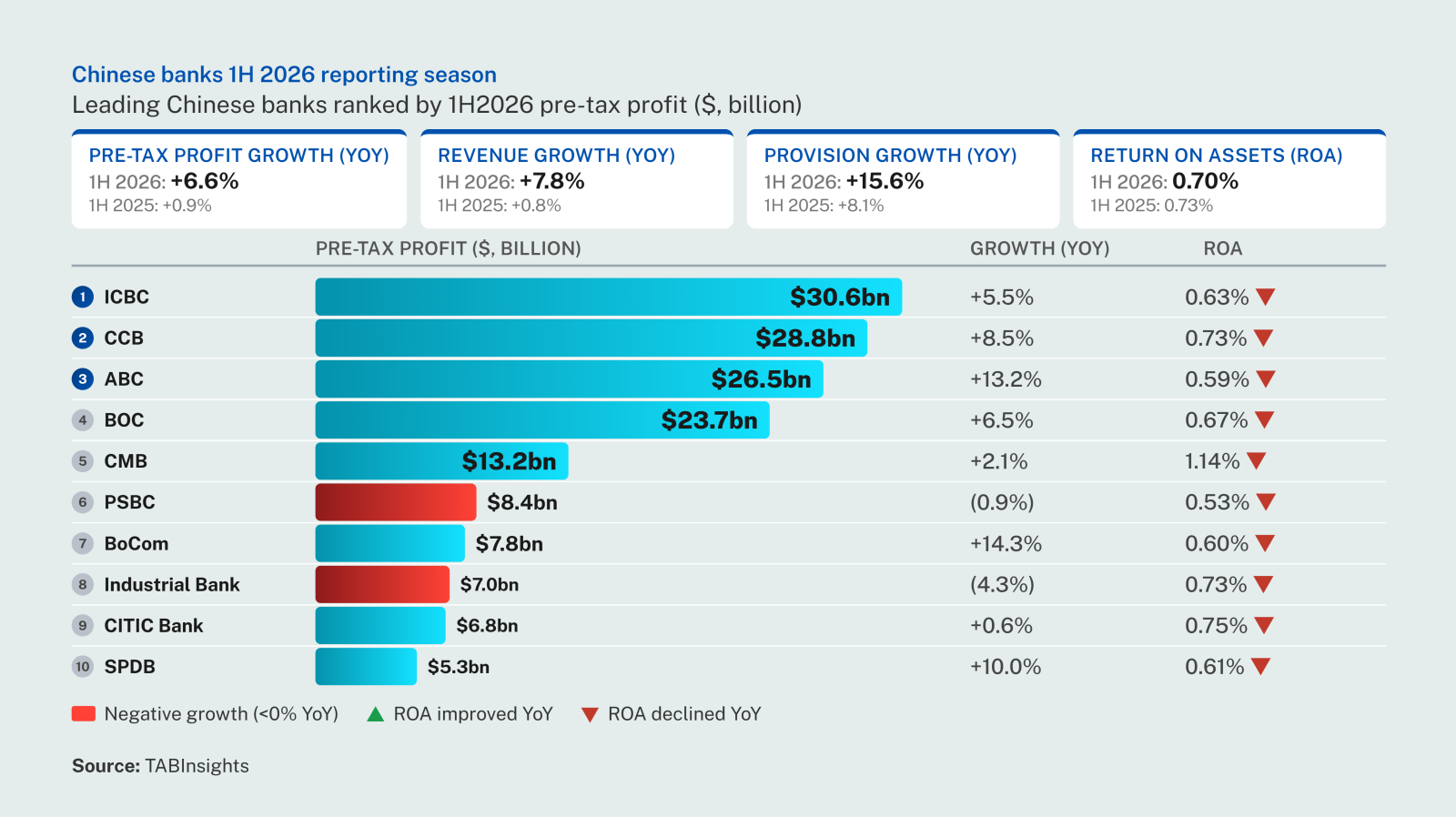



Leading Chinese banks delivered stronger earnings growth in the first half of 2026 (1H2026), but weaker loan demand, rising credit costs and continued pressure on asset yields kept returns under pressure.

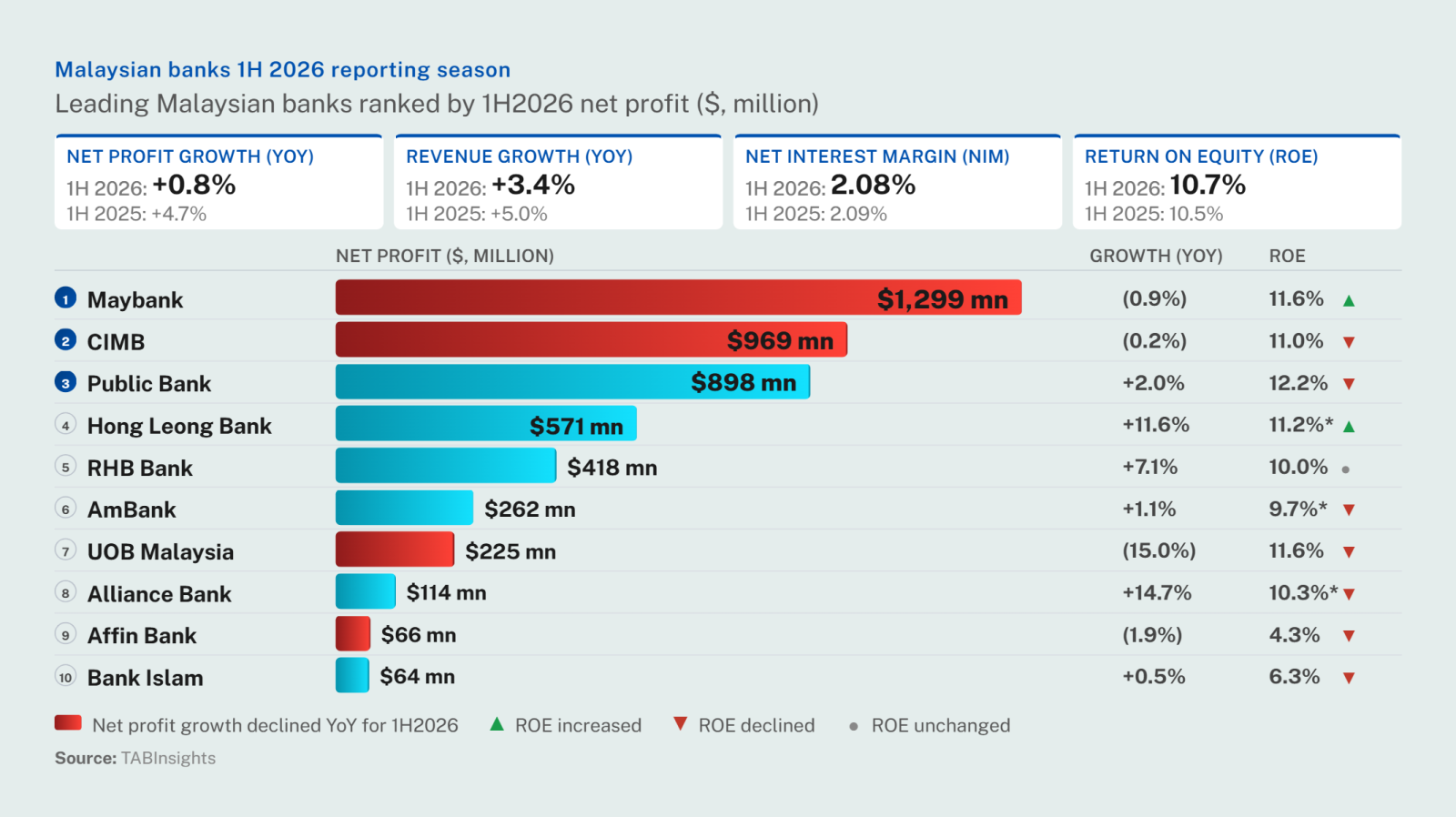
Malaysian banks' net profit was broadly flat in the first half of 2026 (1H2026), but their core lending businesses did not drive the result. Retail banking profit fell or stalled at most large groups, while corporate banking profit was likely flat. Treasury and markets income, wealth management and fund management provided most of the growth. Hong Leong Bank and Alliance Bank were the clearest exceptions, with broad-based operating strength.
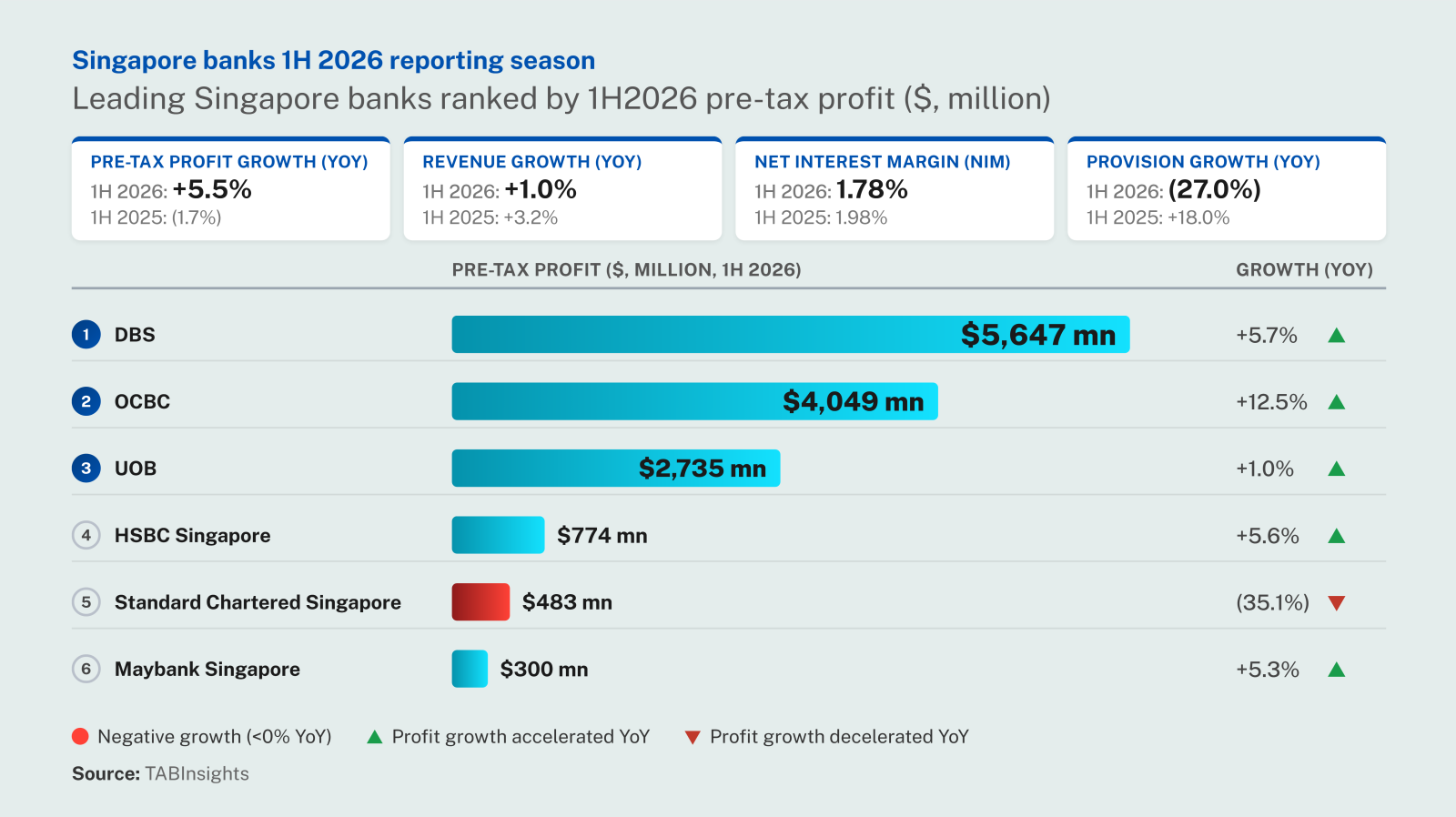
Singapore’s banks turned to non-interest income as margins compressed in the first half of 2026 (1H2026), but the earnings cushion was uneven. OCBC’s broader revenue mix supported stronger profit growth, while UOB’s experience showed that wealth expansion alone could not make up for weaker net interest income.
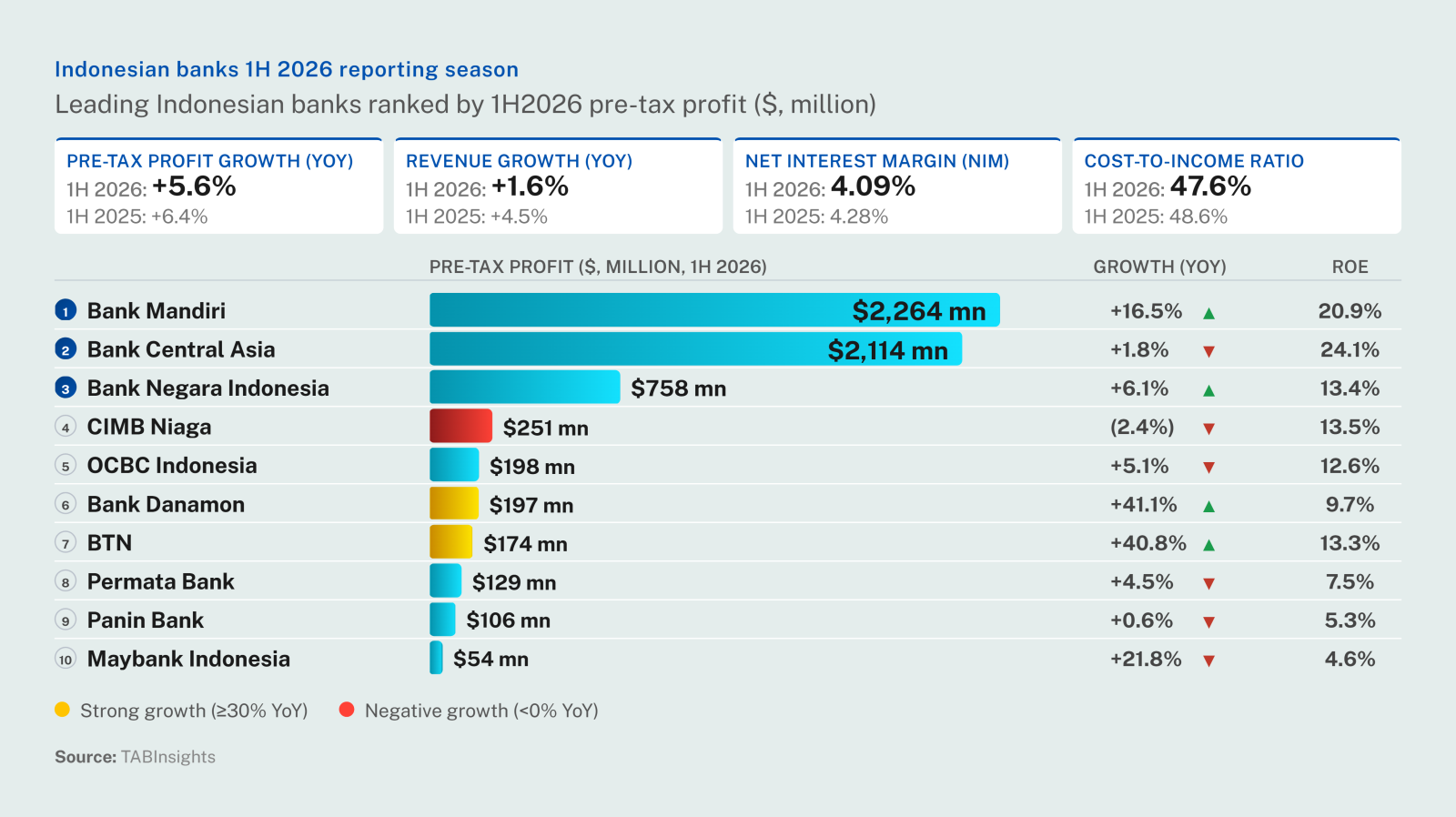
Profit growth slowed among leading Indonesian banks in the first half of 2026 as weaker revenue and narrower margins weighed on earnings. Lower credit costs and improved efficiency, however, helped several large lenders maintain stronger profit growth.
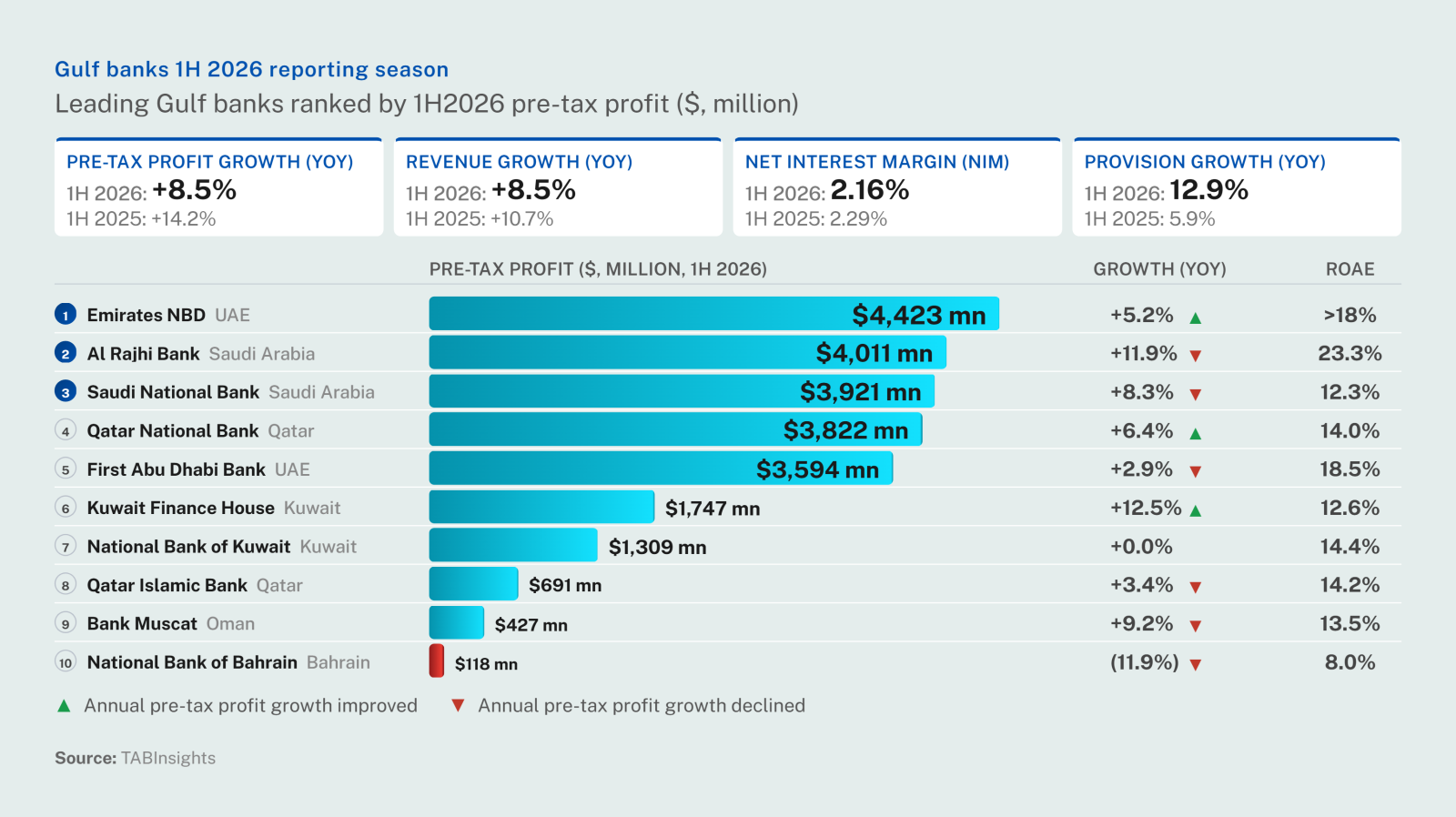
Gulf banks saw earnings momentum weaken in the first half of 2026 as slower revenue growth, narrower margins and higher provisions offset resilient credit quality. Emirates NBD, Kuwait Finance House and Qatar National Bank outperformed, while the Iran conflict amplified differences across markets and raised the stakes for loan growth, funding and credit costs in the second half of the year.
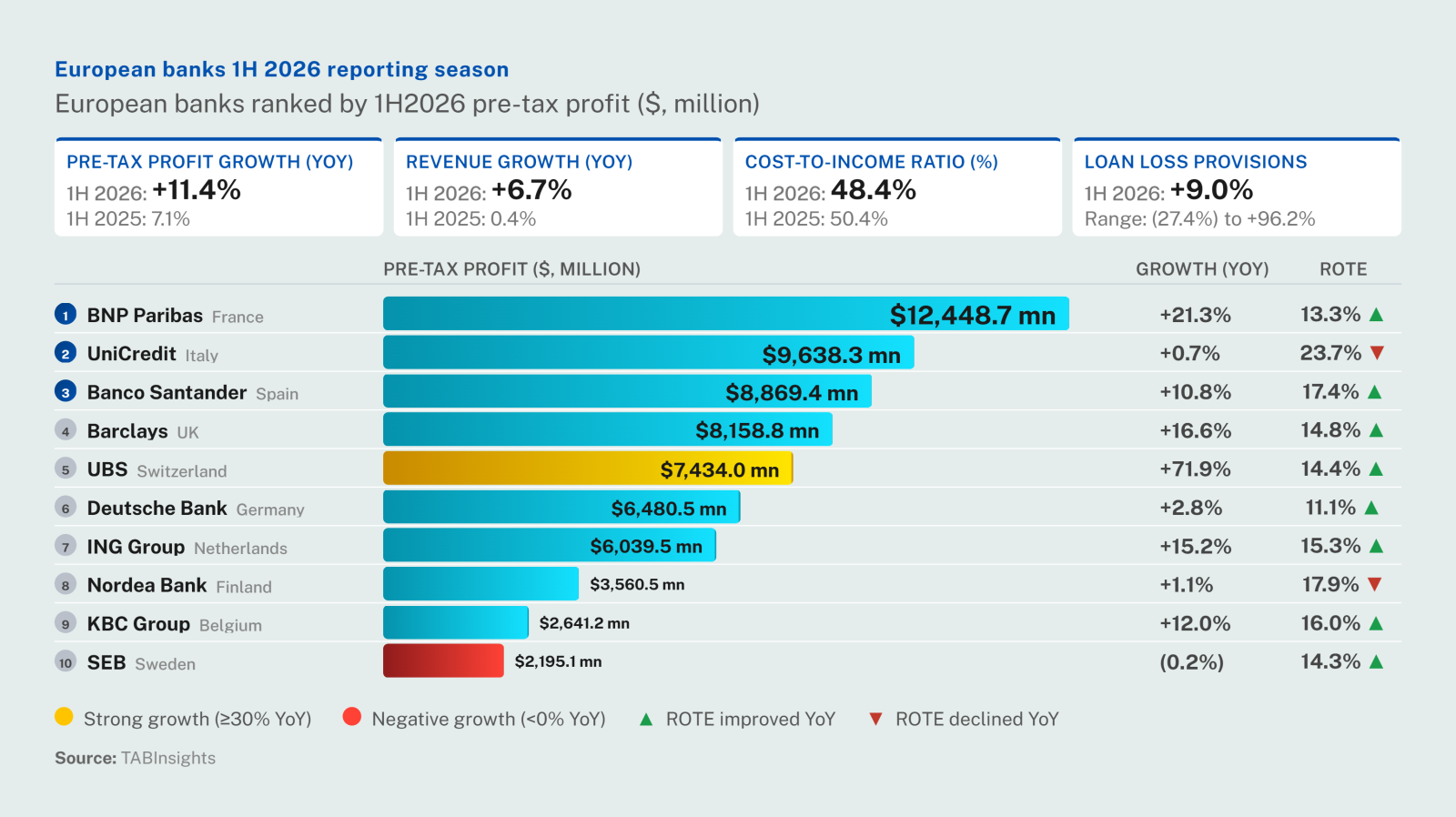
Europe’s largest banks by country showed surprising resilience in the first half of 2026, with broad-based growth across their business segments. UBS, Barclays and BNP Paribas stood out, although part of their results were boosted by corporate-centre gains, treasury performance and exceptional items. Strong earnings prompted several banks to raise their full-year guidance and reconsider mergers and acquisitions
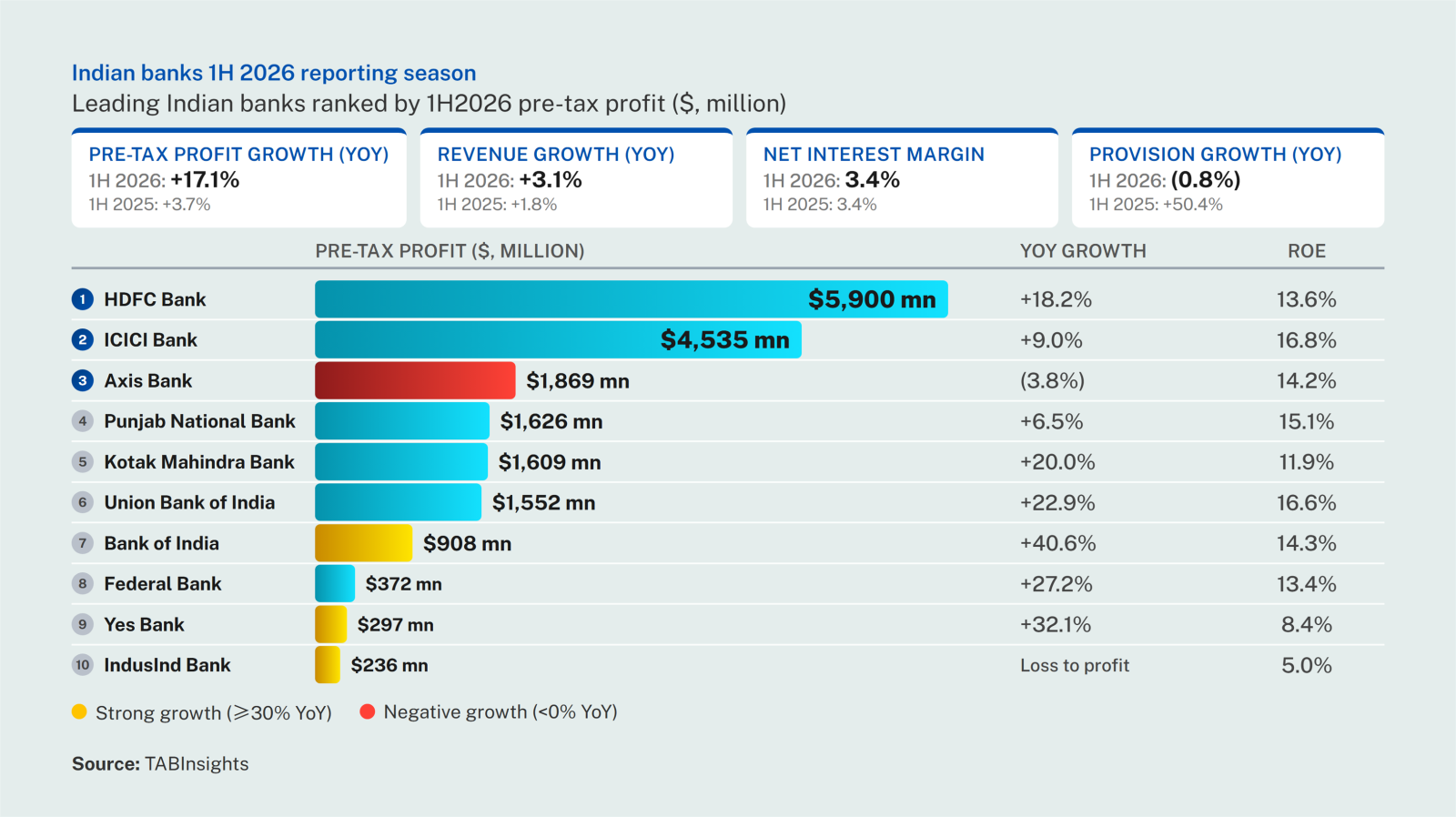
Indian lenders posted stronger first-half profits as lower loan provisions boosted earnings, but weak revenue growth and margin pressure point to a more challenging outlook.
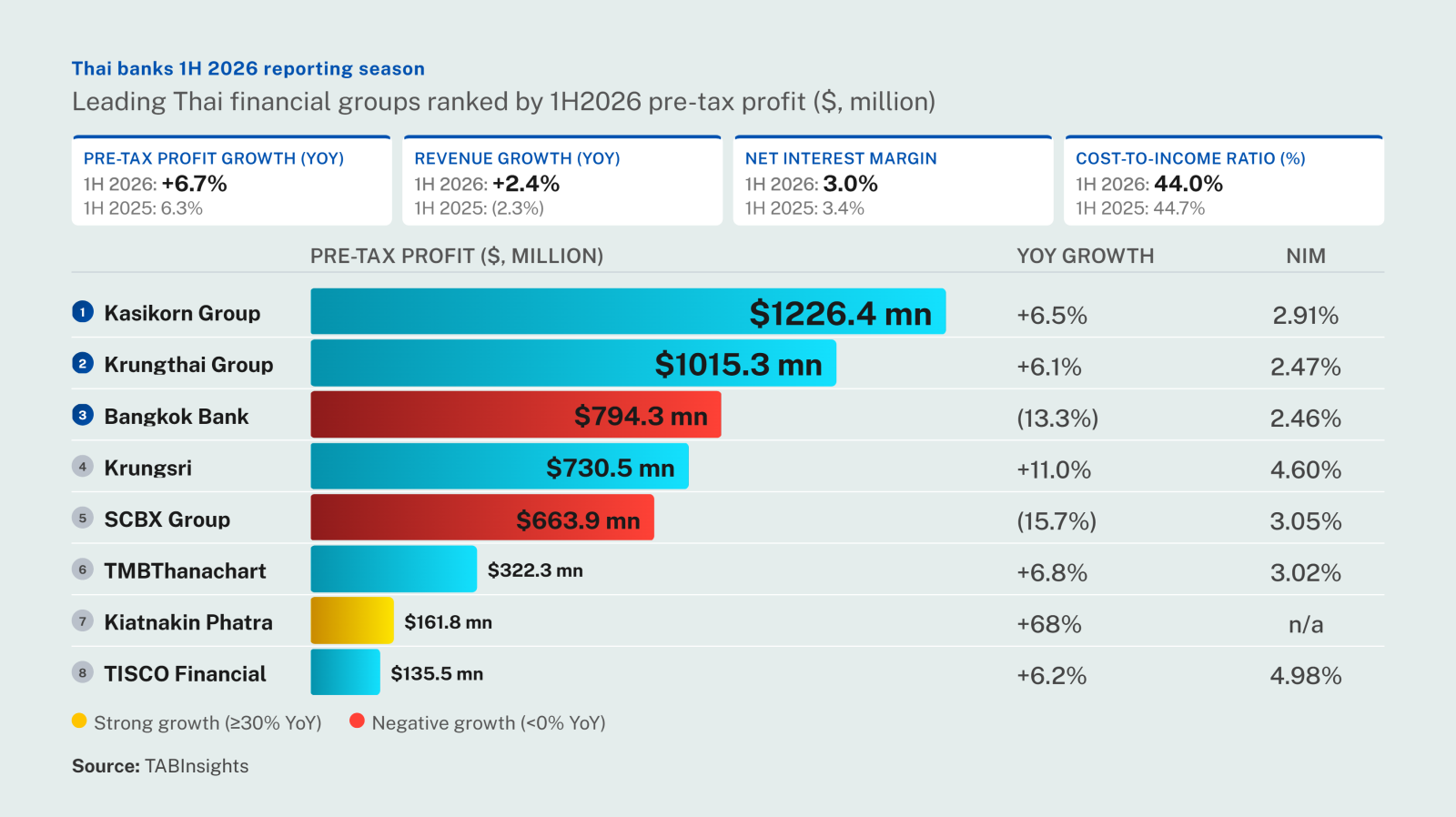
Thai financial players entered the lower-rate cycle in the first half of 2026 with strong balance sheets and capital positions, but the key differentiator was how effectively they repriced deposits as asset yields declined, rather than credit quality. Krungsri emerged as the best-performing financial institution among its peers.
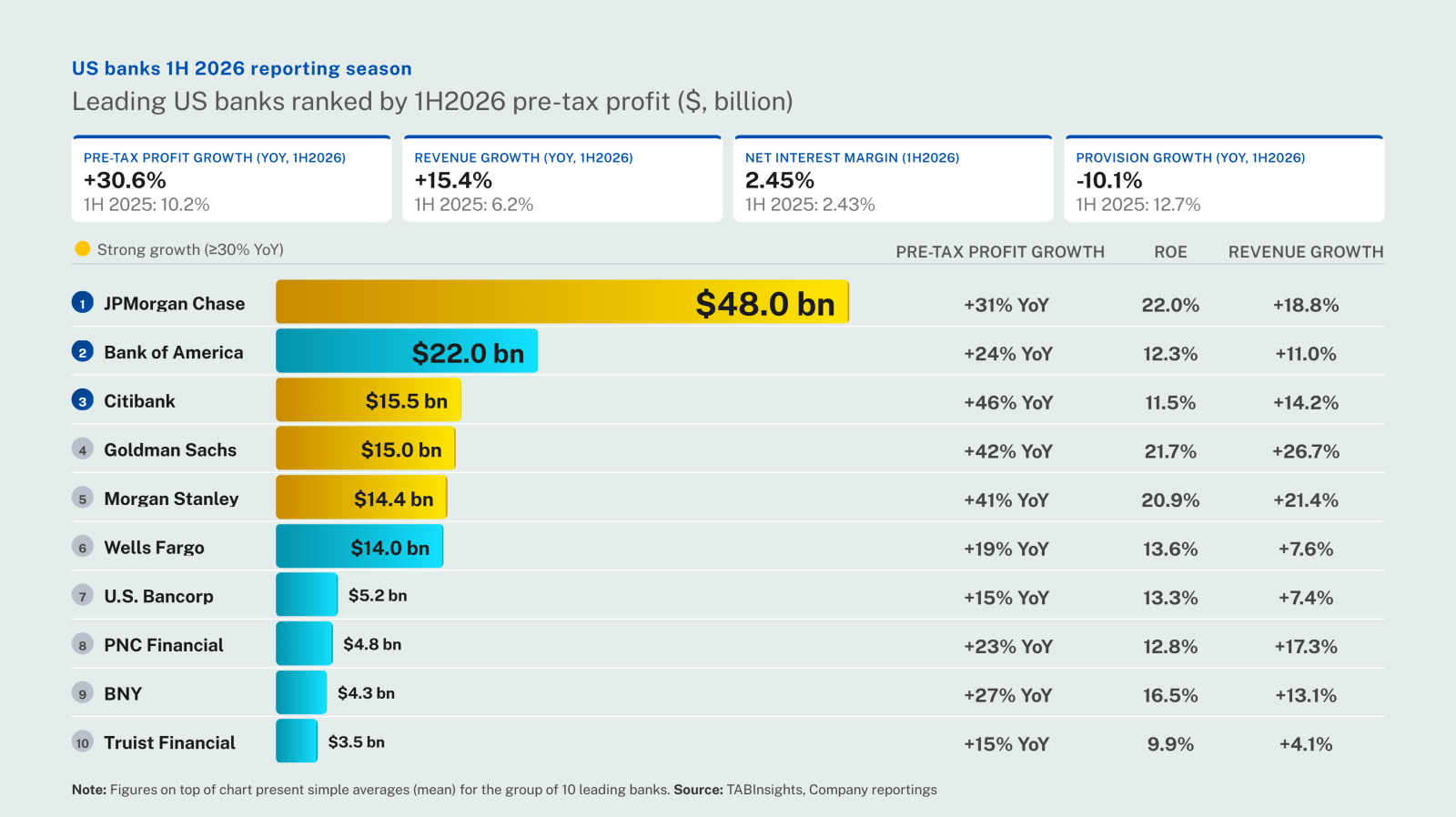
Robust capital markets activity and lower credit provisions lifted first-half earnings at leading US banks, but gains were concentrated among the largest, most diversified institutions. JPMorgan Chase led the group in absolute pre-tax profit, while limited margin expansion and slower revenue growth at regional lenders exposed a widening earnings divide.